
healthy eating
How Much Sugar Is in a Smoothie Bowl? The Real Numbers
Smoothie bowls run anywhere from 30 to 70 grams of sugar — and the gap is all in the build. A founder breaks down where it hides and how to order lower.
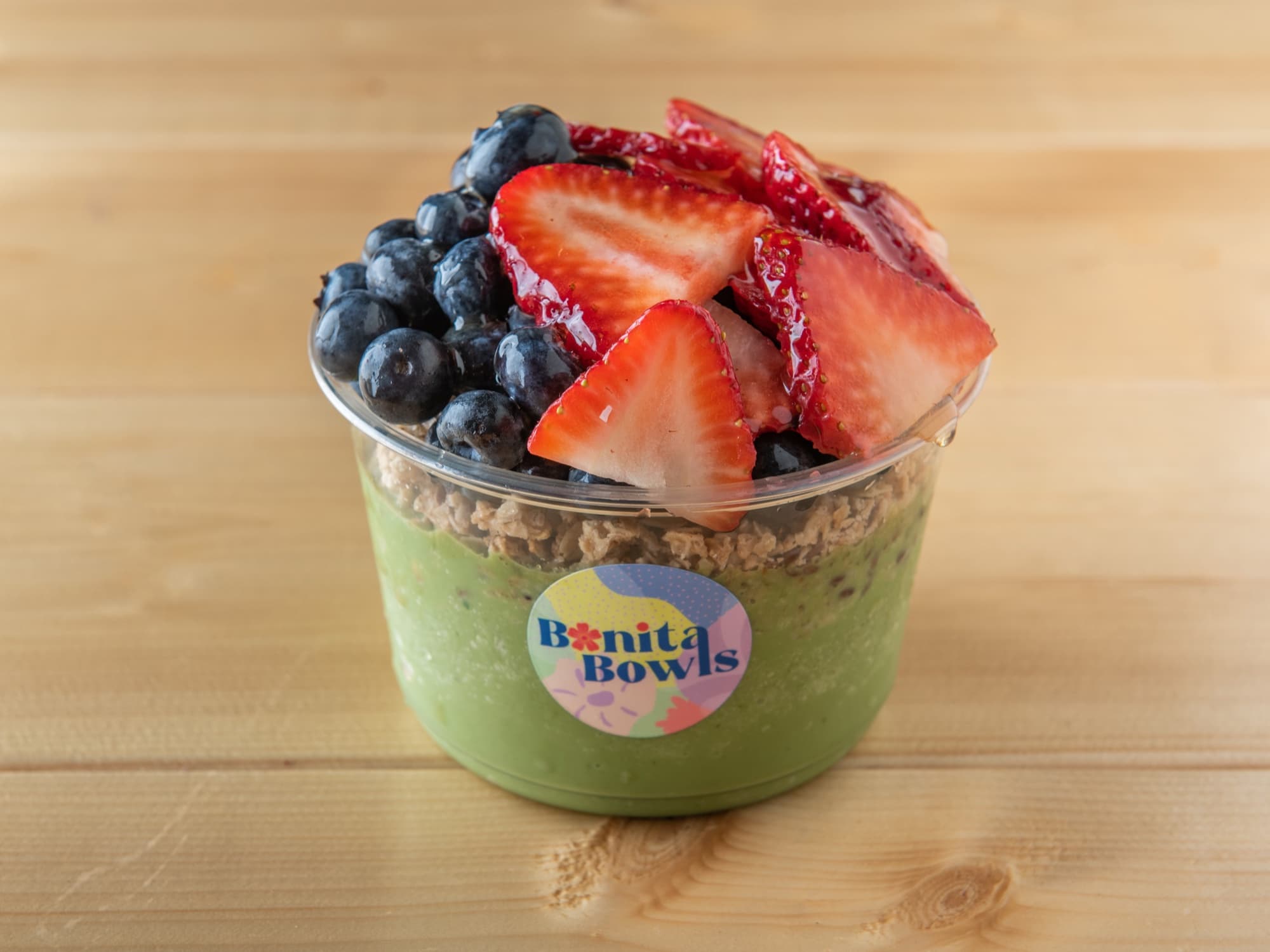
A woman asked me this in Glen Ellyn a few weeks ago, holding the bowl she had just ordered. “How much sugar is actually in this?”
I told her the truth, which is that I couldn't give her one number, and then I told her why. It isn't evasion. It's that a smoothie bowl isn't a recipe. It's a format. The bowl she was holding and the bowl the guy behind her ordered came off the same menu board and were not remotely the same food.
Here's what I can tell you. Most of the sugar in a smoothie bowl is fruit sugar, and fruit sugar isn't the villain it gets made out to be. The added sugar comes from four places, and once you know all four you can move them. The base. The drizzle. The granola. The size of the cup.
That's the whole post. Four levers, our real numbers, and how to pull them at any counter — ours or anybody else's. No scolding, no fear, no pretending our bowls are something they're not.
The short answer — how much sugar is in a smoothie bowl?
A shop-made smoothie bowl typically lands somewhere between 30 and 70 grams of total sugar. The spread is that wide because “smoothie bowl” is a format, not a recipe — one bowl on the board can carry twice the sugar of another one three inches to its left.
Most of that number is fruit sugar. The added sugar comes from four specific places, and once you can name all four, you can move them: the sweetener in the base, the drizzle, the granola, and the extras. Set that frame and the whole conversation changes.
There is no such thing as the sugar content of a smoothie bowl. There is only the sugar content of the bowl you built.
Why nobody can give you one number
Two bowls off the same menu board can differ by 40 grams of sugar. Base sweetener, fruit selection, granola portion, drizzle, and cup size all move independently — and none of them show up in the phrase “smoothie bowl.” The category does not exist at the level of a number. It exists at the level of a build.
Here's where I'll be honest about our own limits. We publish calories, protein, carbs, and fat for every signature bowl on the calories and macros for every bowl we make. We don't publish a separate sugar line yet, because sugar isn't broken out from total carbohydrate in the standard-recipe estimates our production kitchen sends us. Carbohydrate is the closest public proxy we have. It tells you a great deal, and it's honest, and it's second-best.
Nobody else in the category admits what they don't measure. We're working on getting a sugar line on every base — it's two emails and one production run. Until then the carb column is your best read, and I'll flag it every time it stands in.
Total sugar vs added sugar — the distinction that actually matters
Naturally occurring fruit sugar arrives with fiber, water, and micronutrients. Added sugar arrives alone. That's the whole difference, and it's the one distinction most sugar conversations skip.
The American Heart Association's added-sugar guidance caps added sugar at 25 grams a day for women and 36 grams for men. Note the word: added. Not total. Harvard's Nutrition Source on added sugar makes the same distinction and is the cleanest primer I've found on why. Fruit sugar and cane sugar do very different things once they're in the food you eat.
Apply this honestly. A bowl that's mostly banana, strawberry, and blueberry is a different object than a bowl carrying 20 grams of condensed milk and cookie butter. Both can cross 60 grams of total sugar on paper. Only one of them crosses the added-sugar line. Read the whole bowl.
Fruit sugar comes with fiber and water attached. Added sugar comes alone. That's the whole difference.
Where the sugar actually hides in a smoothie bowl
Four levers. Every bowl at every shop is some combination of these. Move any one of them and the number moves.
1. The base
This is the layer nobody photographs and almost nobody asks about, and it's the biggest single sugar variable on the board. Ours specifically:
- Açaí base: açaí, banana, apple juice. Apple juice is a genuine sugar source and we put it on the menu.
- Coconut base:coconut meat, banana, agave, coconut milk. Agave is a sweetener. It's in there, and it's why the coconut base tastes like dessert.
- Green base: spinach, banana, pineapple, coconut milk. Sweetness rides in on the banana and pineapple; no added sweetener.
- Mango and Pineapple bases:two ingredients each. Fruit plus coconut milk. That's the entire list.
- Pitaya base:pitaya, banana, pineapple, coconut milk. Fruit and coconut milk; no added sweetener, which surprises people because it's hot pink.
A base with a sweetener in it starts the bowl further along than a base without one. Neither is wrong. You just deserve to know which one you ordered. If you want to see all six laid out with what each one tastes like, a guide to all six of our bases is the long version of this paragraph.
We put apple juice in our açaí base and agave in our coconut base. That's exactly why you'll never hear us say “no added sugar.”
2. The drizzle
One drizzle is included on every bowl. That decision is the single biggest sugar swing at our counter, and almost nobody makes it on purpose.
The sweet drizzles: Nutella, luma (sweetened condensed milk), dulce de leche, honey, agave, cookie butter, chamoy. All carrying real sugar. The non-sweet drizzles: peanut butter, almond butter. Fat and protein instead.
Swapping a sweet drizzle for a nut butter is the single biggest one-move change available at our counter, and it costs nothing. Same price, same portion, different bowl.
The drizzle is the biggest sugar lever on the board, and it's the one nobody thinks about.
3. The granola
Granola is a sugar source in nearly every shop in the category, ours included. The lever here isn't elimination. It's portion.
Three real options live on our menu, and almost nobody uses them: granola light, granola on the side, or no granola at all. Any team member will build the bowl any of those three ways. The default portion isn't the only option — it's just the one you have to opt out of.
Our granola is gluten-free across the board. It may contain tree nuts, which matters for a small but important group of readers.
“Granola on the side” is the most underrated order on our menu.
4. The portion
A bigger bowl isn't a healthier snack. It's a bigger meal. Portion multiplies every lever above it — if the base has apple juice in it, a larger portion has more apple juice; if the granola is heavy, a larger granola is heavier.
The reframe that helps more than any single swap: a smoothie bowl is a meal. Order it and eat it like one. Ordering a 700-calorie bowl on top of a real lunch two hours later is where sugar-and-calorie math stops being kind.
Which bowls run lowest — our actual numbers
This is the section only we can write, because we publish the numbers. Every figure below is pulled from the calories and macros for every bowl we make — estimates on standard recipes, regular size, base plus the toppings the signature ships with.Carbohydrate is standing in for sugar. It reads high because it includes fiber from fruit and granola. It's directional, not exact, and I want to say so plainly.
First, the number that's going to surprise you. The highest-carb signature bowl on our board isn't an açaí bowl. It's the Namba, a pitaya bowl, at 110.9 g of carbohydrate. Açaí has spent ten years taking the blame for sugar that mostly came from everything around it.
The lowest-carb bowls are the green-base bowls — the ones with spinach in them. Obvious in hindsight. Almost nobody orders them.
The full lineup, sorted low to high on carbohydrate:
- Pura Vida — green base · 463 cal · 74.7 g carbs · 9.2 g protein · 15.7 g fat
- Beach Bum — green base · 491 cal · 78.6 g carbs · 9.5 g protein · 7.12 g fat
- Mando — açaí + coconut · 709 cal · 89.3 g carbs · 13.2 g protein · 54.5 g fat
- Cloud Nine — coconut base · 806 cal · 90 g carbs · 15.4 g protein · 83.5 g fat
- Green Lush — green base · 531 cal · 90.1 g carbs · 10 g protein · 16.8 g fat
- Bali — açaí base · 635 cal · 92.5 g carbs · 11 g protein · 27.6 g fat
- Bonita — açaí base · 670 cal · 96.3 g carbs · 11.7 g protein · 29.8 g fat
- Pillow Talk — coconut base · 811 cal · 96.5 g carbs · 15.3 g protein · 81.8 g fat
- Lotus — pitaya base · 563 cal · 99.1 g carbs · 9.5 g protein · 15.3 g fat
- Power Up — açaí base · 716 cal · 104.6 g carbs · 17.8 g protein · 30 g fat
- Bluffton — pitaya base · 617 cal · 107.9 g carbs · 10.1 g protein · 17.6 g fat
- Purple Rain — coconut base · 771 cal · 86.4 g carbs · 14.7 g protein · 80.8 g fat
- Namba — pitaya base · 623 cal · 110.9 g carbs · 10.3 g protein · 17.2 g fat
A third pattern worth pulling out. The coconut-base bowls aren't high in carbs — they're high in fat. Pillow Talk is 811 calories with 81.8 g of fat. Different conversation, same lesson: read the whole bowl, not one column of it.
The highest-carb bowl on our menu is a pitaya bowl, not an açaí bowl. Açaí has spent ten years taking the blame for sugar that mostly comes from everything around it.
One useful contrast, because it's a question we get every day. The smoothies run far lower than the bowls. Strawberry Banana is 175 calories and 36 g of carbs. Lover's Rock is 232 calories, 31.6 g of carbs, 13.4 g of protein. If someone wants the flavor without the meal, the smoothie board is the honest answer, and we should say so more often.
How to order a lower-sugar smoothie bowl — at our counter or anyone's
Six moves. Every one of them is real on our menu, and every one of them works at almost any shop that lets you customize.
- Pick a green or açaí base over coconut if sugar is the concern. And know the coconut base is a fat story, not a sugar one — different lever, different answer. Neither is wrong. Choose on purpose.
- Ask for granola light, granola on the side, or no granola. All three live on our menu. Almost nobody orders them.
- Swap a sweet drizzle for peanut butter or almond butter. Same price. Completely different bowl. Every counter person knows how to do this.
- Weight the fruit toward blueberries, strawberries, and kiwi rather than mango and pineapple. Berries carry less sugar per bite. Kiwi is the underdog fruit on our menu.
- Add vanilla or chocolate protein. It changes the ratio, not just the total — the Power Up carries 17.8 g of protein for exactly this reason. A scoop into any bowl moves the same lever.
- Order the regular size and eat it as a meal, not as an afternoon add-on. Portion is a lever you use once, at the register, and then it's decided.
You can take a serious amount of sugar out of a bowl with two sentences at the counter. Nobody's going to be annoyed with you.
So is a smoothie bowl a healthy breakfast?
Honest answer: as built, most signature bowls on our board are a meal. Ours run from 463 to 811 calories. As breakfast, most of them land in a reasonable place. As a mid-afternoon extra on top of three other meals, they're a lot of food.
I'm not going to resolve this into a yes or a no. I'll resolve it into a question: how would you know? Read the base. Read the drizzle. Read the granola. Read the size. If those four are dialed for the day you're having, the answer is probably yes. If they're not, the answer is probably that you're eating dessert and calling it something else, which is fine — just call it what it is.
For the longer version of this argument specifically about açaí, I wrote the honest breakdown on açaí bowls earlier this year. The two posts read as a pair.
A smoothie bowl is only as honest as the build. Ours are meals. Order one like a meal and the math works.
Build one you feel good about
So here's what I'd do. Next time you come in, tell whoever's on the counter that you want a green base, granola on the side, and almond butter instead of Nutella. Then eat it as breakfast rather than as a bonus. That's a genuinely good meal and it took you nine seconds to order.
And if you want the opposite — Nutella, luma drizzle, the whole thing — order that too. Just order it knowing what it is. That's all I've ever asked of anybody in this business.
Elmhurst, Glen Ellyn, Park Ridge, Downers Grove, La Grange, Wheaton, Lemont. We open at 8.
Frequently asked
Questions we've heard.
- How much sugar is in a smoothie bowl?
- It depends almost entirely on how it's built. A typical shop-made smoothie bowl lands somewhere between 30 and 70 grams of total sugar, most of it naturally occurring fruit sugar. The base, the drizzle, the granola portion, and the cup size move that number more than the fruit itself does.
- How much sugar is in an açaí bowl specifically?
- Açaí itself is one of the lowest-sugar fruits used in any bowl base — it's tart, not sweet. Most of the sugar in an açaí bowl comes from what surrounds it: the banana and juice in the base, the granola, the honey or Nutella on top. Açaí gets blamed for sugar it didn't bring.
- Is total sugar the same as added sugar?
- No, and the difference matters. Naturally occurring sugar in fruit arrives with fiber, water, and micronutrients. Added sugar arrives on its own. The American Heart Association recommends capping added sugar at 25 grams a day for women and 36 grams for men.
- Which Bonita bowl has the lowest sugar?
- We publish carbohydrate rather than sugar, so carbs are the closest honest proxy. On that measure the green-base bowls run lowest: Pura Vida at 74.7 g of carbs and 463 calories, and Beach Bum at 78.6 g and 491 calories. The green base is spinach, banana, pineapple, and coconut milk, and it tastes nothing like a salad.
- Do your bases have added sugar?
- Some do, and we would rather tell you than dodge it. The açaí base includes apple juice. The coconut base includes agave. The mango and pineapple bases are two ingredients each — fruit and coconut milk. That is why you will never see us claim "no added sugar" on a menu board.
- How do I order a lower-sugar smoothie bowl?
- Four moves cover most of it: choose a green or açaí base, ask for granola light or on the side, swap a sweet drizzle like Nutella or luma for peanut or almond butter, and lean the fruit toward berries and kiwi instead of mango and pineapple. Adding a scoop of vanilla or chocolate protein shifts the ratio further.
- Is a smoothie bowl a healthy breakfast or a dessert?
- It's whichever one you built. Our signature bowls run from 463 to 811 calories, which makes them a meal rather than a snack. Eaten as a meal, a fruit-based bowl with real toppings is a reasonable breakfast. Eaten as an afternoon extra on top of three other meals, it's a lot of food.
Keep reading
More from the journal.
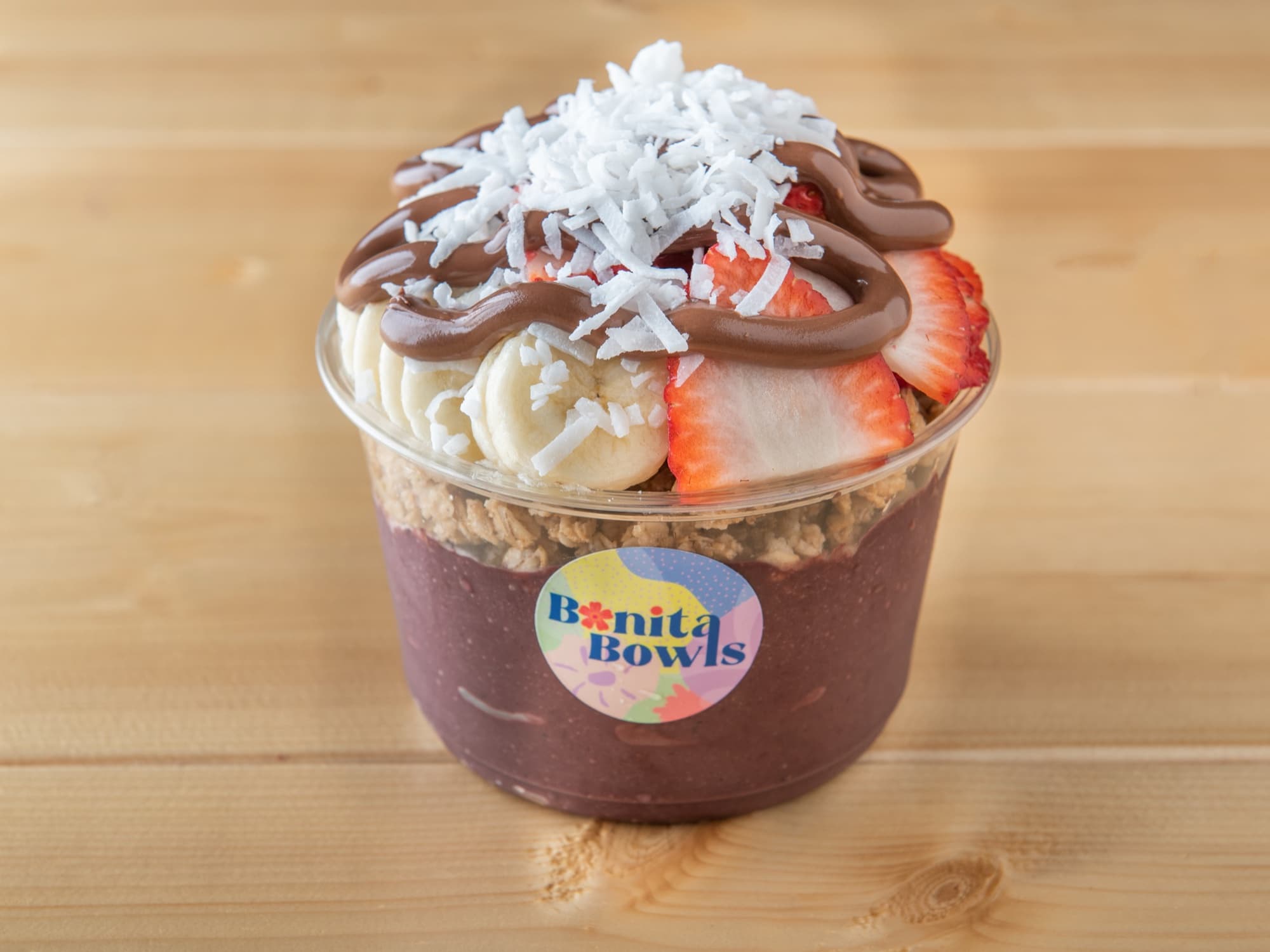
local
Why a Local Brand Refuses to Serve Packet Açaí
Most açaí bowls in America start from a packet. Ours don't. A local Illinois founder on the packet shortcut, the recipe choice, and what it costs to do it right.
Read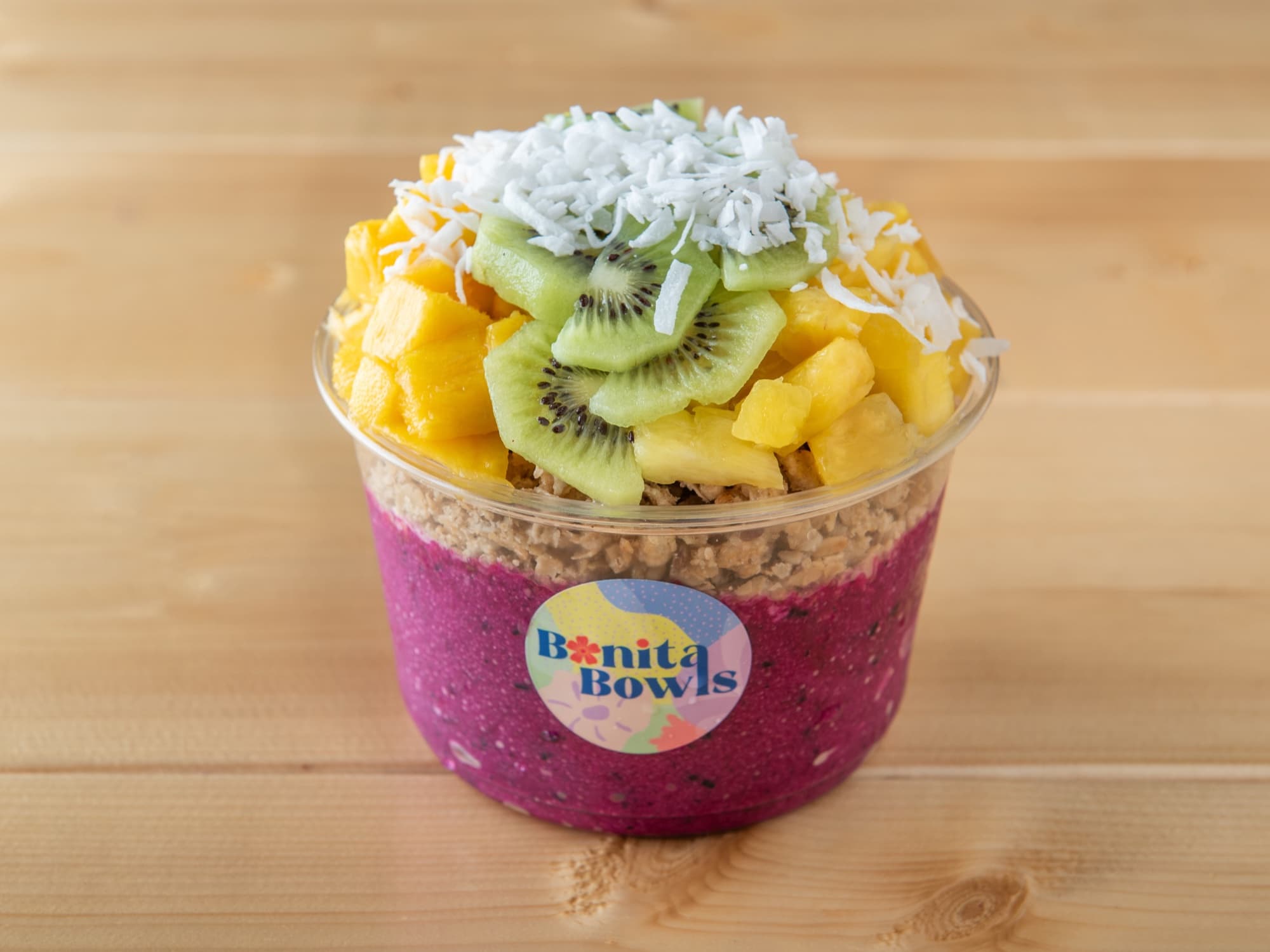
menu
Açaí, Pitaya & More: A Guide to Bonita's Bowl Bases
Açaí, pitaya, coconut, green, mango, pineapple — our six bases, each our own recipe. What every one tastes like and which bowl to order.
Read