
healthy eating
Are Açaí Bowls Healthy? An Honest Breakdown
Are açaí bowls actually healthy? The founder of Bonita Bowls breaks down the sugar, the calories, the antioxidants, and how to spot the difference between a real bowl and a dessert in disguise.
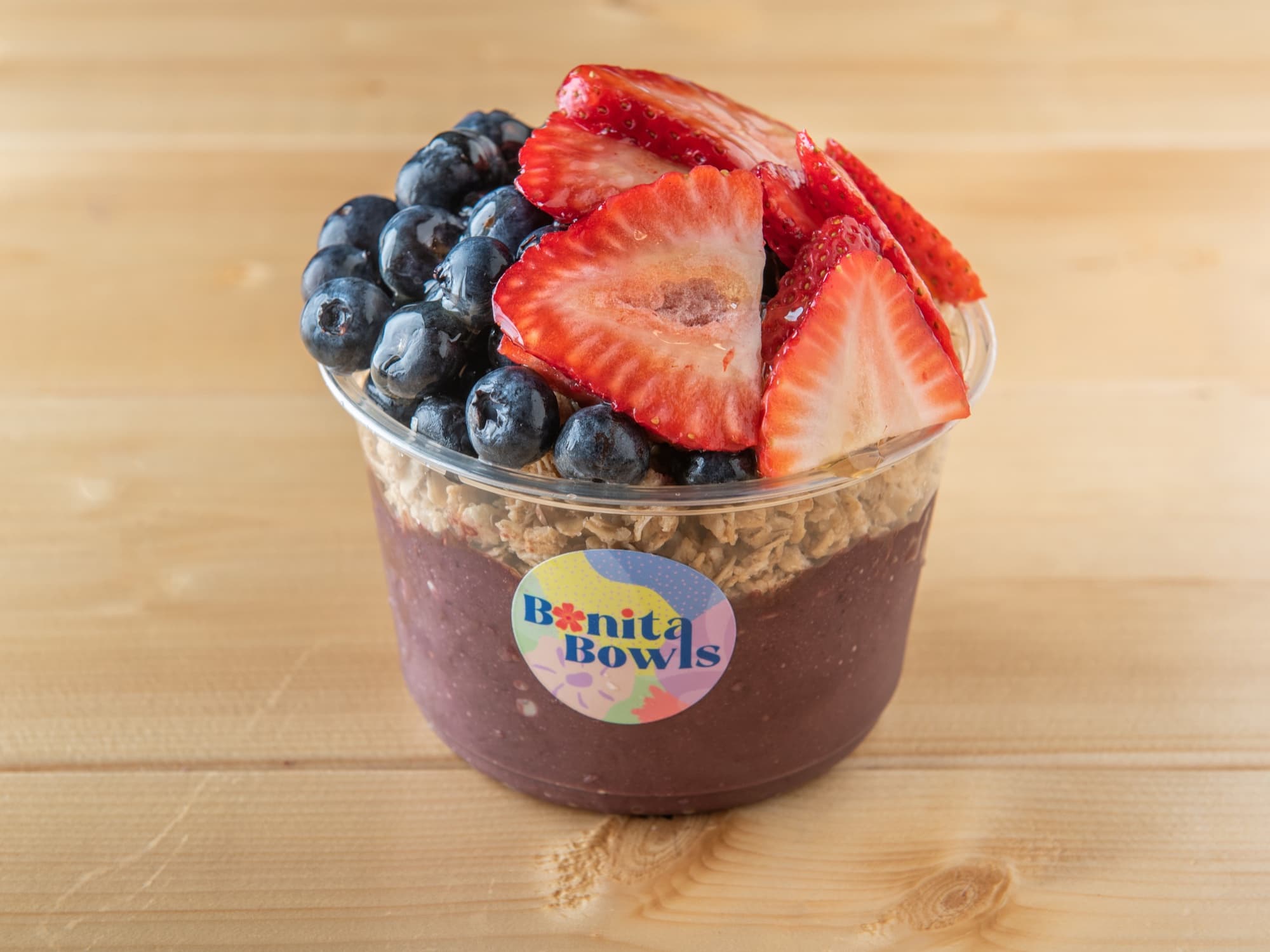
The most honest answer I can give you about whether açaí bowls are healthy is this: it depends, and most of what it depends on isn't the açaí.
I get this question every week. Sometimes it's a Glen Ellyn mom watching her teenager order a second bowl. Sometimes it's a guy at the counter who just finished a Prairie Path run and wants to make sure he isn't undoing it. Sometimes it's someone scrolling Instagram who saw a 1,200-calorie açaí “bowl” stacked four inches high with Nutella and condensed milk, and got reasonably suspicious.
Here's the truth. Açaí, the actual fruit, is one of the healthiest things you can put in your body. It has fiber, healthy fats, antioxidants, and almost no sugar of its own. The problem isn't the açaí. The problem is what most shops doto it — adding sugar to the base, pouring on commercial granola welded together with corn syrup, drizzling honey like it's free.
So before you write off the bowl, or order another one without thinking, give me ten minutes. I'm going to walk you through every part of an açaí bowl, what's actually healthy, what isn't, and how to tell the difference anywhere — not just at our shops.
The short answer — are açaí bowls healthy?
Yes — when they're made right. No — when they aren't. That sounds like a cop-out until you realize how wide the gap is. A well-built açaí bowl is one of the most nutrient-dense single meals you can order anywhere. A poorly built one has more sugar than two cans of Coke and more calories than two slices of pizza.
The variables that decide which one you're holding are: the base recipe, the portion size, the granola, and the toppings— roughly in that order of impact. Get those four right and an açaí bowl is breakfast, lunch, or post-workout fuel that you can be proud of. Get any of them wrong and you're eating a purple sundae.
Our point of view at Bonita is simple: every shop should be able to tell you exactly what's in the bowl. If they can't, that tells you what you need to know.
What's actually in an açaí bowl?
Every açaí bowl is built from three layers. If you want the long story on what açaí actually is,I wrote a whole post on it. Here's the structural version:
- The base. Frozen açaí pulp blended with something to make it scoopable — usually a liquid (juice, milk, water), a fruit (banana, mango), and sometimes a sweetener. This is where a bowl is won or lost.
- The fruit.Fresh strawberry, banana, blueberry, mango, kiwi — whatever's in season and what the customer picks. This layer is rarely the problem. Fresh fruit is fresh fruit.
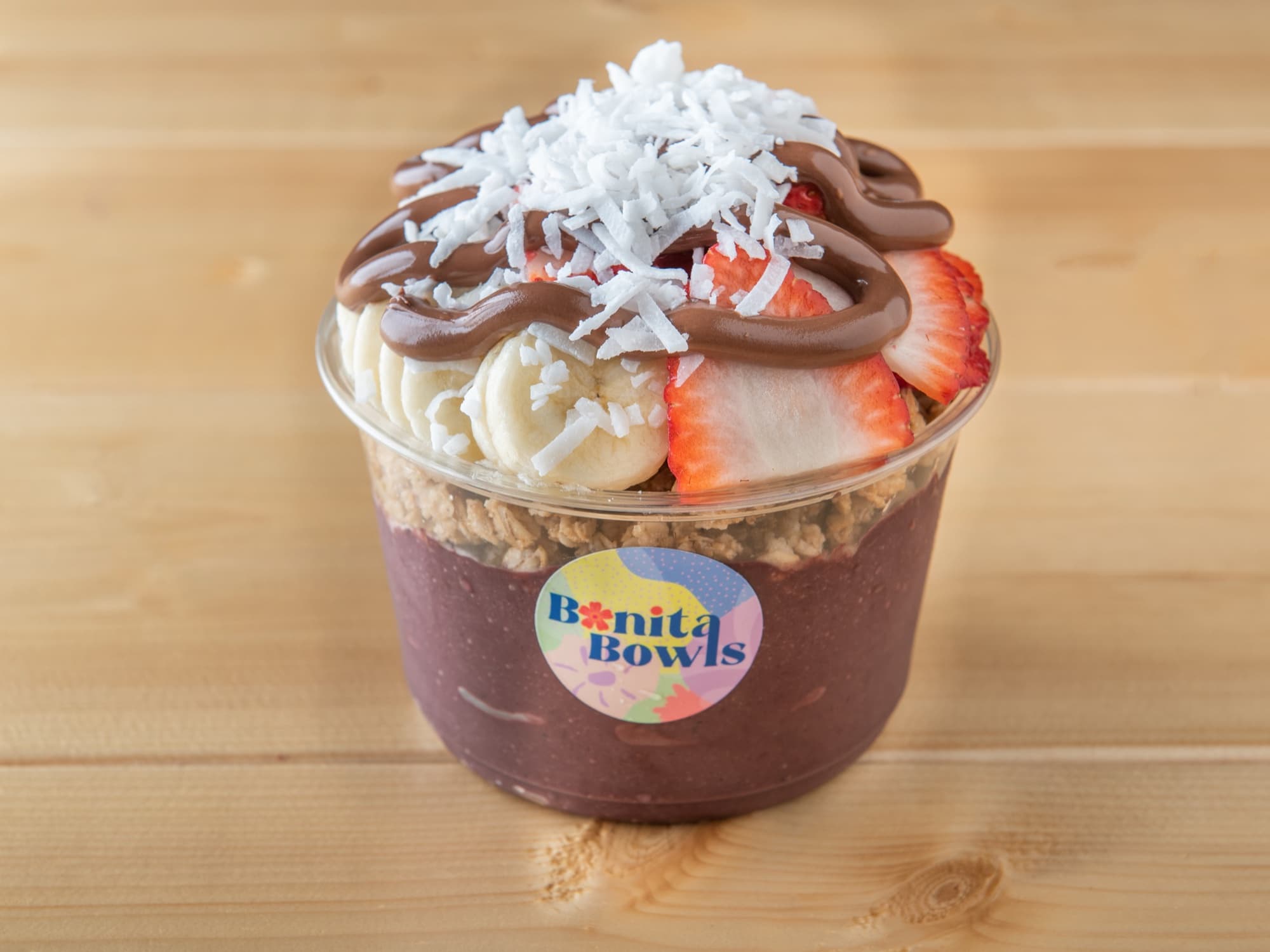
- The toppings. Granola, drizzles, nut butters, coconut flakes, hemp seeds, chocolate chips, Nutella. This layer can quietly add 500 calories and 25 grams of sugar before you notice.
Each layer has its own way of going wrong. The base is where most chains hide added sugar (a pre-mixed packet is the usual shortcut, and the second ingredient on a lot of those packets is sugar or syrup). The toppings are where customers themselves often turn a healthy bowl into a dessert without realizing it.
Quotable, if you're screenshotting: an açaí bowl is only as healthy as the base it's built on.
How many calories are in an açaí bowl?
Across the industry, anywhere from about 200 calories to over 1,000per bowl. That's a five-times difference. Wider than almost any other category of restaurant food.
Why so wide? Three reasons:
- Portion.A “small” at one shop is a 16-ounce cup. A “small” at another is a 24-ounce bowl piled six inches high. That's not a small — that's a dessert with a marketing department.
- The base sugar. A pre-mixed sweetened base adds roughly 100 calories of pure sugar before any toppings touch the bowl.
- The toppings. Two tablespoons of Nutella add about 200 calories. A heaped quarter cup of commercial granola adds another 150. A drizzle of honey on top, another 60. You can double the calories of a healthy bowl with three small additions.
A typical Bonita signature bowl lands in a real-meal range — built on our own recipe, with a real portion, with toppings dialed in. We're working with the kitchen team to publish the precise per-bowl macros for the Bonita, the Bali, and the Power Up; until those are live on the page, ask any team member at the counter and they'll walk you through what's in the bowl you're ordering.
Here's the rule I tell people: a 400-calorie bowl is a meal. A 900-calorie bowl is a dessert pretending to be breakfast. Treat them differently.
How much sugar is in an açaí bowl?
Industry-wide, anywhere from about 20 grams to over 70 grams of sugar per bowl, depending on the build.
Sugar in an açaí bowl comes from three places. Knowing the source is the difference between “this is breakfast” and “this is dessert.”
- The base (added).Pre-mixed packets are often sweetened with cane sugar, syrup, or fruit juice concentrate. Some packets list sugar as the second ingredient. This is the sugar you're paying for and probably not noticing.
- The fruit (natural).Bananas, mangos, and strawberries bring natural fruit sugar. This sugar comes packaged with fiber, vitamins, and water — it doesn't spike blood sugar the way refined sugar does. Don't fear the fruit.
- The toppings.This is where bowls quietly explode. Commercial granola is the worst offender — most off-the-shelf granolas are 20 to 30 percent sugar by weight, mostly added. Honey and Nutella each add about 10 grams of sugar per drizzle. Chocolate chips, condensed milk drizzles, “cookie butter” — these turn a bowl into a sundae fast.
Quotable claim: granola can add 20 grams of sugar to a bowl in seconds. The fruit isn't the problem — the topping usually is.
How to read a menu and spot the sugar bomb: look at the base ingredient list (if it includes sugar, syrup, or “agave nectar” before the third ingredient, that's a sweetened base). Look at the topping menu — if every signature has Nutella, honey, or condensed milk by default, you're ordering dessert. Look at the size relative to other shops — supersized “smalls” are a tell.
What's actually healthy about açaí?
The fruit itself — when you strip away every variable a shop can mess with — is genuinely among the most nutrient-dense things you can eat. Three reasons it deserves the reputation:
- Antioxidants. Açaí is loaded with anthocyanins — the same compounds that give blueberries, red cabbage, and purple grapes their color. The USDA's nutrition data on açaí confirms the polyphenol density is in a class with the highest-ranked fruits we measure.
- Healthy fats.Açaí is unusual for a fruit in that it contains real fat — omega-3, 6, and 9 — in roughly the same ratio you'd find in olive oil. This is why a real açaí bowl satisfies you in a way most fruit-based meals can't.
- Fiber.Açaí pulp is rich in fiber, which slows sugar absorption and keeps you full. Combined with whatever fresh fruit you stack on top, you're looking at a meal that hits fiber goals most American breakfasts whiff completely.
Quotable: açaí is one of very few fruits with healthy fats built in. That's why a real bowl satisfies.
Important — I'm not going to tell you açaí cures anything, treats anything, or prevents anything. It's food. Good food. Read it as part of a balanced diet, not as a supplement.
What's NOT healthy about açaí bowls?
Five honest pitfalls, in roughly the order of how much damage they do:
- Sugary packets.If a shop uses a sweetened commercial packet for its base, the bowl was over the line before a single topping landed. You can't out-fruit a sugar-packed base.
- Industrial granola. Most off-the-shelf granolas are sugar-glued oats. The crunch you love is held together with honey, syrup, and oil. A heaping scoop can add 20+ grams of sugar and 200 calories on its own.
- Dessert toppings sold as breakfast toppings. Nutella, condensed milk, white chocolate drizzle, chocolate chips — all of these have their place. Their place is in dessert, not in your “healthy” bowl. If you choose them, choose them on purpose and read the bowl accordingly.
- Oversized portions sold as “small.” The biggest unspoken trick in the industry. A small at one shop is a meal. A small at another is a meal-and-a-half. Look at the actual ounces, not the label.
- Mystery menus.If you ask “what's in the base?” and the team can't answer, that's the answer. Transparency is the proxy for quality.
How to spot a genuinely healthy açaí bowl
Five practical checks you can use anywhere — not just at our shops:
- Is the base a real recipe, or a scoop from a packet? Ask. A good shop will know exactly what's in the base. (Ours: açaí, banana, apple juice. That's the whole list.)
- What's in the granola?If it's a brand name you'd recognize from the grocery store, it's probably sugar-glued. Shops that take granola seriously will tell you. Ours is gluten-free and we offer light or regular.
- Is the portion realistic, or supersized? A 14-to-16-ounce bowl is a meal. A 24-ounce bowl is two meals. Both are fine — just know which one you ordered.
- Are the drizzles optional? Honey on the side, not dumped on top. Nutella as a choice, not a default. A shop that lets you opt out of sweet additions is signaling that the bowl stands on its own.
- Is the fruit fresh, or frozen and watery? A real shop is cutting fresh strawberry and banana the morning you order. Watery, half-defrosted fruit is a tell.
Are açaí bowls a good breakfast?
For the right kind of person, yes — and for most people, better than the breakfast they're otherwise grabbing.
Compare a real açaí bowl to the usual suspects: a bagel with cream cheese is roughly 500 calories of refined carbs with very little protein or fiber. A fast-food breakfast sandwich is in the same calorie range with 1,200 milligrams of sodium and almost no fruit. Sweetened oatmeal in a paper cup at a coffee chain is often 50 grams of sugar before you add anything.
A well-built açaí bowl puts you somewhere completely different — fiber, healthy fats, antioxidants, fresh fruit, and (with the right toppings) a real shot of protein. You actually walk out feeling like you ate breakfast, not like you ate a pastry.
We open at 8 AM every day at every shop for exactly this reason. Find your closest Bonita and try once. The difference between a real morning bowl and a drive-thru sandwich is the kind of thing you have to taste, not read about.
Are açaí bowls healthy for kids?
Yes, with a couple of small caveats.
Kids love bowls. The colors are bright, the toppings are fun, and they'll happily eat fruit they'd push around the plate at home. That's a win.
Two adjustments to make it a clean win nutritionally:
- Skip the chocolate and Nutella signatures.Kids don't need the added sugar, and the bowl doesn't need it to taste good. Banana plus strawberry plus a drizzle of honey is plenty.
- Order honey or syrups on the side. Drizzled on top, they soak in fast and add up. On the side, kids dip and eat — which usually means less sweetener overall.
Easiest kid-friendly order at our shops: build-your-own, açaí or coconut base, banana, strawberry, granola, honey on the side.That's it. Real fruit, real portion, modest sugar.
Are açaí bowls healthy for weight loss?
Honest answer: they can be — but they're not a low-calorie food.
A 400-calorie bowl with fiber, fat, and protein will keep you full longer than a 400-calorie pastry. That's a real advantage if you're trying to manage hunger. But it's a meal, not a snack. Treat it like one.
A few practical adjustments if you're watching macros:
- Drop the third topping. You'll save 100-200 calories with no real loss of flavor.
- Choose a base without heavy sweeteners. Ask. The team will tell you.
- Add hemp seeds, chia, or a scoop of vegan protein — push the protein-to-calorie ratio in your favor.
- Skip the drizzle. The fruit and base together are usually sweet enough.
I'm not going to give you a weight-loss claim — that's not my lane. But I'll tell you: there are a lot worse meals you could be eating at 8 AM than a real açaí bowl.
The Bonita standard
Everything I've written above is what I'd tell you no matter where you were ordering. Here's what we do specifically — so you can decide whether we're holding our own to the standard.
One. Six bases, all our own recipes. Açaí, pitaya, coconut, green, mango. Every recipe was developed by us and is blended for us by a local Illinois production kitchen partner from raw frozen pulp — the açaí ships in frozen from our supplier in Brazil. Bowls and smoothies are built and blended fresh to order in every shop. The differentiator is the recipe and the ingredient transparency, not where the blending step happens.
Two. Real ingredients you can read.Our açaí base is açaí, banana, and apple juice. That's the whole list. Our coconut base is coconut, coconut milk, and a touch of agave. Our green base is spinach, banana, pineapple, and coconut milk. Every ingredient is on the menu page — see what we put in our signature bowls. We don't hide behind “proprietary blend.”
Three. Granola you control.All of our granola is gluten-free. Choose light, regular, on the side, or skip it entirely. We'd rather you eat the bowl the way you want it than nudge you into more sugar by default.
Four. Build-your-own at the same price.$13.95, mix two bases for free, up to three fruits, one drizzle included. We don't penalize you for ordering the bowl that actually fits your day. Want green base + açaí base, banana, hemp seeds, no drizzle? Same price as the signature. That's on purpose.
Quotable, and the closest thing we have to a thesis: we don't make açaí bowls. We make food that happens to start with açaí.
FAQ — your most common questions answered
See the dedicated FAQ section below for the eight questions we get most often about açaí-bowl health, sugar, calories, and how to order. Most answers are pulled straight from how we'd answer in the shop — short, direct, no spin.
Try a Bonita bowl this week
If you're going to eat an açaí bowl this week, I'd love it to be one of ours. Walk into any of our seven locations between 8 AM and close — Elmhurst, Glen Ellyn, Park Ridge, Downers Grove, La Grange, Wheaton, or Lemont. Try the Bonita, the Bali, the Power Up, or build your own. Tell them Kyle sent you.
Or if you're not ready to commit, save this post and read it next time you're standing in front of any açaí menu, anywhere. You'll know what to look for.
Frequently asked
Questions we've heard.
- Are açaí bowls actually healthy?
- Yes, when they're made with real ingredients, real fruit, and a sensible portion of toppings. They can be unhealthy when the base is loaded with hidden sweeteners or the bowl turns into a dessert with chocolate, candy, and a pound of granola.
- How many calories are in an açaí bowl?
- Anywhere from about 200 to over 1,000, depending on the base, the size, and the toppings. A typical real-portion bowl — meaning one you can finish in a sitting and call breakfast — lands somewhere in the 400 to 600 calorie range. Closer to a meal than a snack.
- How much sugar is in an açaí bowl?
- Açaí itself has very little sugar — it's one of the few fruits that's actually low in natural sugar. The sugar in your bowl usually comes from three places: the base (if it's sweetened), the granola, or sweet toppings like honey and Nutella. A bowl can range from around 20g to over 70g of sugar depending on what's on top.
- What's the difference between an off-the-shelf packet and Bonita's bases?
- Most chains scoop pre-mixed packets — recipes designed by someone else, often with added sugar. Bonita's six bases are our own recipes, blended to spec by a local Illinois production kitchen from raw frozen pulp (the açaí ships in from our supplier in Brazil). Our açaí base is açaí, banana, and apple juice. That's it. The recipe is the differentiator, and we put every ingredient on the menu.
- Are açaí bowls good for breakfast?
- They're one of the better breakfast options when made with real ingredients. You get fiber, healthy fats, antioxidants, and (with the right toppings) protein — all in one bowl. That's more nutritional density than a bagel, a muffin, or most fast-food breakfast sandwiches.
- Are açaí bowls healthy for kids?
- With modest toppings, yes. Kids get fruit, fiber, and healthy fats. Skip the chocolate-and-Nutella signatures and go simple — base, banana, strawberry, granola, and honey on the side. Build-your-own makes that easy.
- Can açaí bowls help with weight loss?
- They can fit into a weight-loss plan when you treat them as a meal, not a snack — a 400-calorie bowl with fiber and a little fat will keep you full longer than most breakfast options. Skip the third topping if you're watching macros, and choose shops that don't sweeten the base.
- Why do some açaí bowls taste sweet even with no sugar added?
- The fruit. Banana, mango, strawberry, and pineapple blended into the base bring natural sweetness without any need for added sugar. If a bowl tastes overwhelmingly sweet, the source is usually syrup, agave, or fruit juice in the base — not the fruit itself.
Keep reading
More from the journal.
local
Why a Local Brand Refuses to Serve Packet Açaí
Most açaí bowls in America start from a packet. Ours don't. A local Illinois founder on the packet shortcut, the recipe choice, and what it costs to do it right.
Read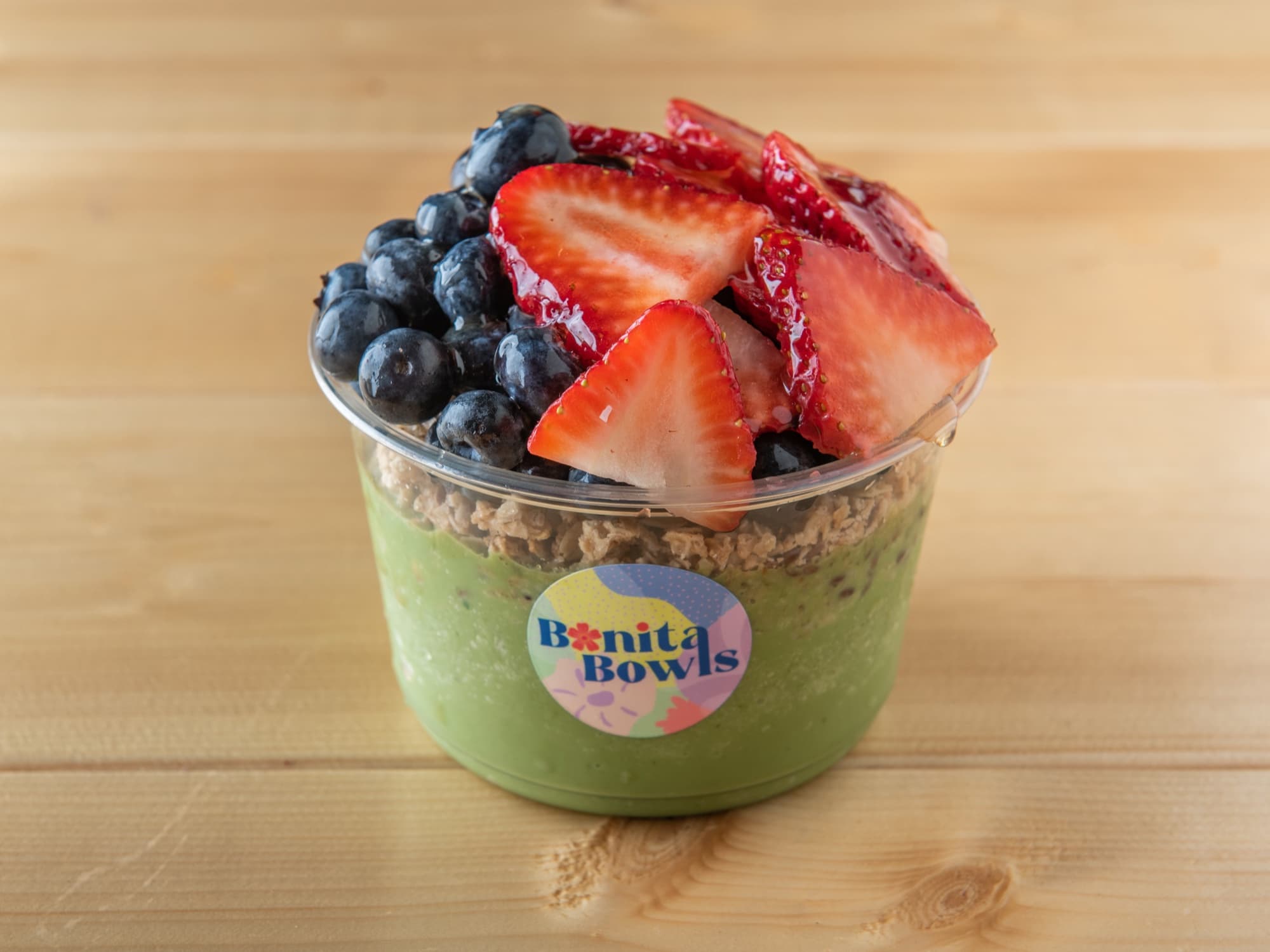
healthy eating
How Much Sugar Is in a Smoothie Bowl? The Real Numbers
Smoothie bowls run anywhere from 30 to 70 grams of sugar — and the gap is all in the build. A founder breaks down where it hides and how to order lower.
Read