
local
Why a Local Brand Refuses to Serve Packet Açaí
Most açaí bowls in America start from a packet. Ours don't. A local Illinois founder on the packet shortcut, the recipe choice, and what it costs to do it right.
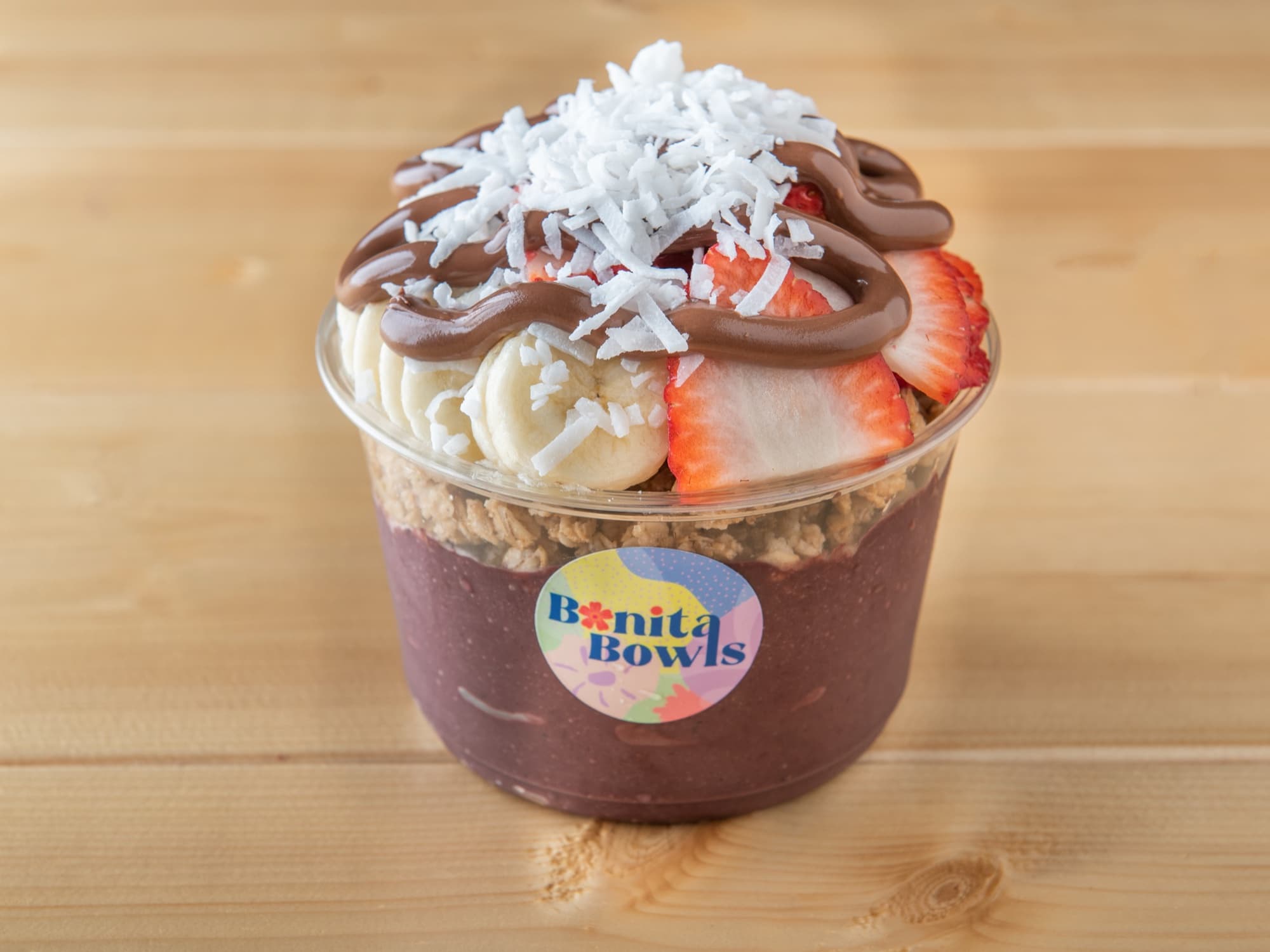
Most açaí bowls in America start from a packet.
It's a frozen sachet, pre-blended somewhere in a factory, pre-sweetened to a uniform recipe, and shipped to shops around the country. The shop opens it, blends it with liquid, and serves. That's the bowl. That's where it started. That's how it always tastes — in California, in Texas, in Florida, in the suburb that just got a new chain location.
That's not a knock. It's a logistics decision. If you're opening 200 stores across 30 states, packet açaí is the only way to keep the recipe identical from store to store. You can't custom-recipe a base when the person picking the recipe lives in another state from the person eating the bowl.
We made the other choice.
Our açaí base is our own recipe. The raw frozen açaí pulp comes from our supplier in Brazil. The recipe is blended for us by a local Illinois production kitchen — not packet-shipped from out of state. Bowls are built fresh to order at every one of our seven stores. We can change the recipe next week if we need to. We have. We will.
Here's what that choice costs, why we made it anyway, and what it actually tastes like in the bowl.
What is “packet açaí,” actually?
A packet is exactly what it sounds like: a pre-blended, pre-sweetened, frozen sachet of açaí pulp plus filler plus a sweetener, mass-produced to one uniform recipe and shipped to shops. Pop the packet, blend with a liquid, serve. That's the whole workflow.
It exists because it's operationally simple. One recipe. No training. Same output in every store, every market, every state. A chain opening 200 stores across the country literally cannot custom-recipe a base — packet açaí is the only way to standardize a footprint that large. The packet approach is the operational default at most national chains for exactly that reason.
I'm not going to sit here and pretend the packet is evil. It's a business decision. If you're playing that game, it's the right decision. But you should know it's the game being played.
Packet açaí isn't a recipe — it's a logistics decision dressed up as a menu item.
What's in your bowl when you order from us
Our sourcing chain is short, and I can say the whole thing in one sentence: raw frozen açaí pulp from our supplier in Brazil → our own base recipe blended for us by a local Illinois production kitchen → bowl built fresh to order in store. Three steps. Three named parties. Nothing in the middle we can't point at.
The açaí base recipe is three ingredients: açaí, banana, and apple juice. That's the whole list. Apple juice is a genuine sugar source and we say so — that's why we'll never claim “no added sugar” on the menu board. We wrote the recipe knowing every ingredient, and the customer gets to see every ingredient too.
Why this matters in practice: we choose what goes in our base. We adjust it when it needs adjusting. We do not get a packet handed to us with the recipe already decided.
We wrote the recipe. We can rewrite the recipe. That's the entire difference.
For the longer version of what açaí actually is — what açaí actually is walks through the fruit itself. And if you want to see the six base recipes side by side, our six bases lists every ingredient in every one.
The four things a packet can't do
Once you've made the packet decision, you've made four other decisions with it. Some you might not have realized you made.
1. A packet can't be adjusted for the customers who actually walk in
National recipes are built for a national average. Suburban Chicago isn't the national average — a Prairie Path bike crowd, a Metra commuter crowd, a soccer-mom-at-the-Elmhurst-shop crowd don't taste like a customer in Phoenix or Miami.
We adjusted our base to what the customers in front of us actually said they wanted. When a chain gets that feedback in year one at a new market, the feedback goes into a slide deck and dies there. A packet doesn't update. A recipe does.
A national recipe is built for a customer who doesn't live anywhere. Ours is built for the ones who live here.
2. A packet ships with whatever sweetener the manufacturer chose
Many packet açaí products contain added sweeteners or fillers — cane sugar, syrup, fruit-juice concentrate, sometimes a stabilizer to keep the color right. The customer can't see that decision. The shop can't change it. It arrives pre-mixed.
Our açaí base contains açaí, banana, and apple juice. Apple juice is sugar. I'm not going to pretend otherwise. But we know exactly what's in it because we picked every ingredient, and if we ever want to change the sweetener source, that's a conversation with our production kitchen, not a multi-year contract with a factory in another state.
We know every ingredient in our base because we picked every ingredient in our base.
The longer read on sugar — where it comes from in a bowl and how to move it — the real numbers on smoothie bowl sugar covers it in detail.
3. A packet can't be replaced when something better shows up
A new supplier. A new ingredient. A new seasonal idea we want to test. A cleaner sweetener. A better-tasting banana varietal. A chain locked into a 30-state packet contract waits months, often years, to change any of that. We can change it next week.
This isn't theoretical. We've rewritten base recipes after launch — not radically, but the details that make a bowl taste right when you know it well. That's the kind of thing that's a memo to our kitchen, not a nine-month change management project across a national footprint.
If I find a better way to do this tomorrow, you eat the better version next week. That's only true at a local operator.
4. A packet means the person who picked the recipe doesn't live where you live
This is the one that matters most, and it's the one nobody talks about at the counter. The decision-makers behind the bowls in most national chains live in another state, work from another time zone, and have never been to your Metra stop. The recipe that's about to end up in your bowl was picked by somebody for whom your town is a dot on a rollout map.
There's nothing wrong with those people. They're doing their job. But their job isn't your bowl. Their job is 200 bowls a day at 200 stores in 30 states, averaged out. Yours is one of the 40,000.
Our recipes were picked by somebody who eats at his own shops. Different math.
Somebody picked what's in your bowl. The only question is whether that somebody has ever been to your town.
Why this is harder — and why we still chose it
Blending our own bases costs more. It takes more coordination — the supplier relationship, the production kitchen relationship, the recipe QA, the training so every team member can tell you what's in every base. It slows us down on growth. A shop that opens 12 stores a year is easier to run when the base arrives in a box.
The tradeoffs stack. Custom recipes mean we can't just plug into a national distributor and let the truck show up. They mean I've been in more production-kitchen meetings this year than I ever imagined a business owner would be. They mean the finance model doesn't look like a franchise pitch deck — the margin per bowl is a little tighter, the supplier calls are a little longer, and the whole thing genuinely takes more thought than opening a store with a binder full of vendor SKUs.
We chose the harder version anyway. The reason is boring and it's the whole thesis of this post: the bowl is the product.Everything else — the cup, the sign, the loyalty app, the store count, the founder's Instagram — is decoration on top of the bowl. A chain that wins on store count but loses on the bowl is winning the wrong game, and eventually the customer notices.
We grow slower because we won't cut the bowl. That's the trade.
What this means when an out-of-state chain opens near you
Out-of-state operators are moving into the Chicago suburbs. That's good news for the category — competition validates the market and makes everybody sharper. I mean that.
Here's what's different when a national chain opens two towns over:
- The bowl. Their base got picked by somebody in another state. Ours got picked by somebody who eats a bowl from his own shop most days of the week.
- The hours. Every shop is open 8 AM to 9 PM, seven days a week, and Elmhurst stays open until 10 every night. Set by people who live in these towns, not by a regional schedule.
- The founder.If you message me, I answer. That's a promise, not a marketing line. Send it and see.
- The recipe pace. We can adjust our bowls faster than a national chain can commission a new packet run. That means the bowl gets better over time in a specific, measurable way.
We don't mind competition. We just refuse to compete on packet terms.
How to tell what you're actually being served
You shouldn't need a blog post to figure out what's in your bowl. But until you can ask the person who actually picked the recipe, this is a practical checklist that works at any shop:
- Ask if the base is made fresh or comes from a packet. A staff member who knows the answer, either way, is a good sign. A staff member who doesn't know is telling you something.
- Ask what's in the açaí base.If they can list the ingredients, the base has a recipe. If they can't, it probably came out of a bag with a label somebody else wrote.
- Look at the consistency. Packet bases tend to look very uniform, day to day, and run a lighter purple. Fresh-blended bases vary a little — the fruit varies, the seasons vary — and they tend to run deeper purple.
- Ask who picks the recipe.There's usually only one right answer if you're looking for a real conversation, and it's not “a team at headquarters.”
These four questions work anywhere, and none of them are aggressive. Most staff will be happy you asked. If they're not, that's also useful information.
You shouldn't need to read a blog post to know what's in your bowl. But until you can ask the person who picked it, this is the next best thing.
Curious what the fruit itself actually is at the nutritional level? The USDA's nutritional data on raw açaí is the cleanest independent source. And if you want the full health-value read on the bowl itself, are açaí bowls actually healthy is the long answer.
Come taste what locally-blended actually means
If you've only ever had packet açaí, you have not had açaí. Come into any of our seven Chicago-suburb shops — Elmhurst, Glen Ellyn, Park Ridge, Downers Grove, La Grange, Wheaton, Lemont — and order one bowl on our açaí base. The Bonita, the Bali, or the Power Up are the easiest places to start. Tell the team this post sent you. They'll know what to do.
We open at 8. Every shop, every day.
Frequently asked
Questions we've heard.
- What is packet açaí?
- Packet açaí is a pre-blended, frozen sachet of açaí pulp combined with sweeteners and fillers, produced to one uniform recipe and shipped to shops. The shop opens the packet, blends it with liquid, and serves. It's the operational default at most national açaí chains because it standardizes the recipe across every location, regardless of market.
- Does Bonita Bowls use packet açaí?
- No. Our açaí base is our own recipe — açaí, banana, and apple juice — blended for us by a local Illinois production kitchen using raw frozen açaí pulp from our supplier in Brazil. Bowls are built fresh to order at each store.
- Is packet açaí bad for you?
- It depends on the packet. Many packet products contain added sugar, syrup, or fillers that the customer can't see and the shop can't change. Some are cleaner than others. The honest answer is that without knowing the brand, you don't know what's in it — which is the underlying problem with the format.
- How can I tell if an açaí bowl uses a packet?
- Ask. A staff member at a fresh-blended shop should be able to tell you exactly what's in the base. If they can't, that's your answer. Other signals: packet bases tend to be lighter and very uniform; fresh-blended bases vary slightly day to day and tend to run deeper purple.
- Why don't more shops blend their own bases?
- Because it's harder. Custom recipes require relationships with suppliers and local production partners, training, and consistency systems. National chains operating in 30 states can't do that affordably. A local Illinois brand operating in seven towns can.
- Where does Bonita's açaí actually come from?
- The raw frozen açaí pulp comes from our supplier in Brazil. Our base recipes are then blended for us by a local Illinois production kitchen. The recipes are ours, the local blending is ours, the bowls are built fresh to order at each store. The chain is short on purpose.
Keep reading
More from the journal.
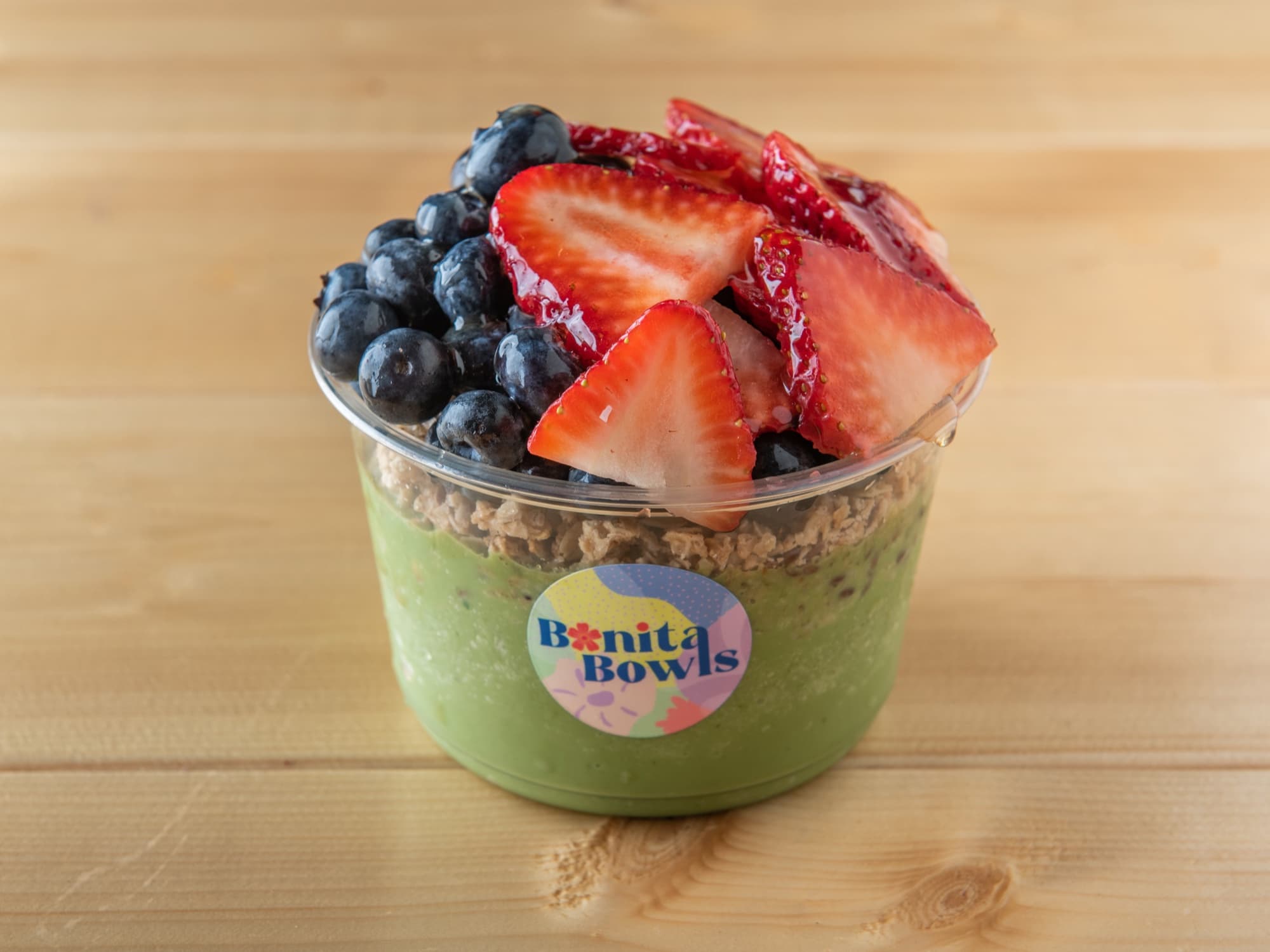
healthy eating
How Much Sugar Is in a Smoothie Bowl? The Real Numbers
Smoothie bowls run anywhere from 30 to 70 grams of sugar — and the gap is all in the build. A founder breaks down where it hides and how to order lower.
Read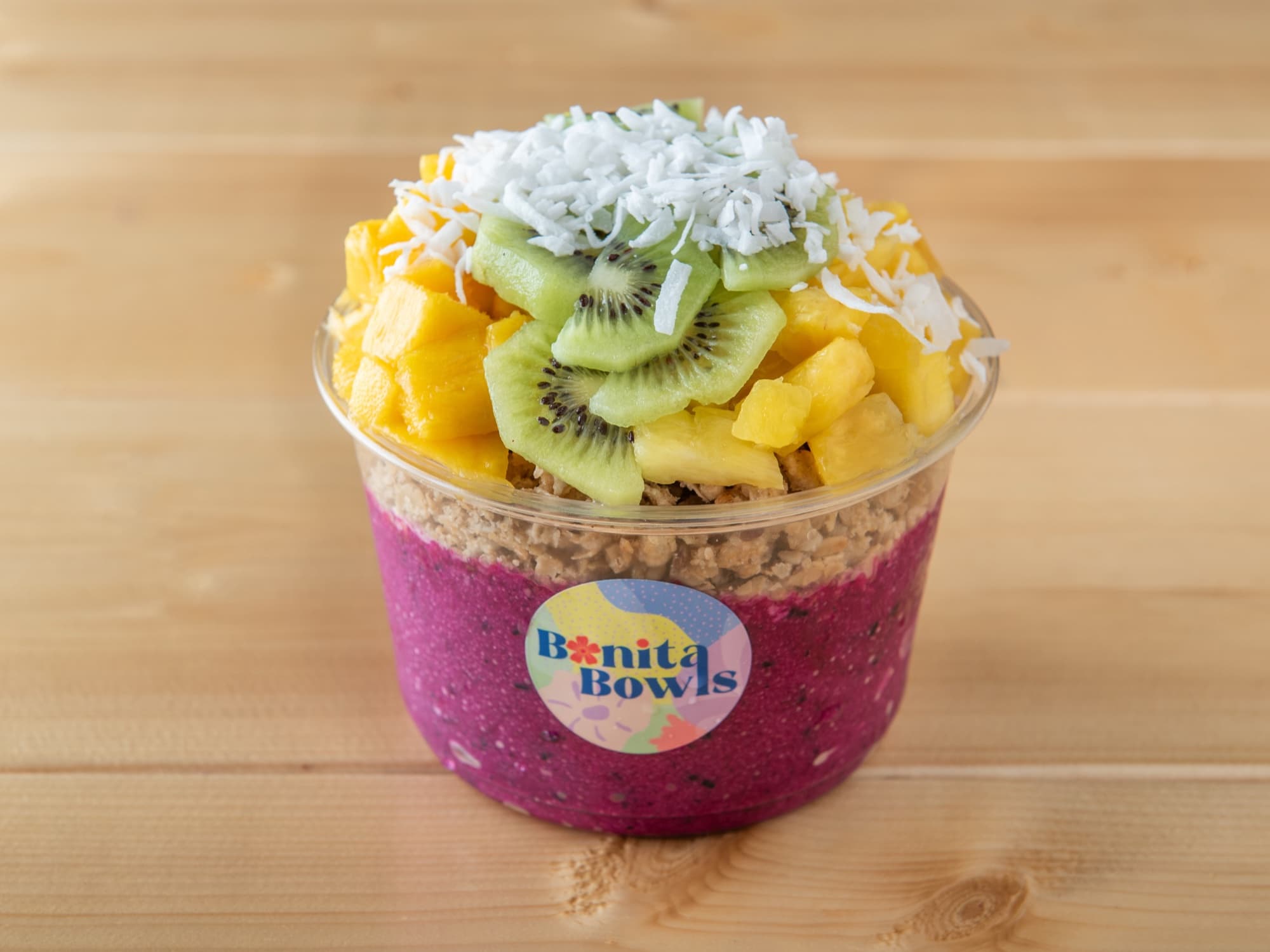
menu
Açaí, Pitaya & More: A Guide to Bonita's Bowl Bases
Açaí, pitaya, coconut, green, mango, pineapple — our six bases, each our own recipe. What every one tastes like and which bowl to order.
Read